Topology Framework
Topology is a shared control model for s3g-dsp plugins. In multichannel effects, active patch-matrix lanes become points. In instruments and encoders, voices or sources provide the points. The points form a network, and each plugin maps that network to sound.
This keeps automation compact. REAPER sees global controls while per-lane variation stays inside the plugin.
Framework Diagram
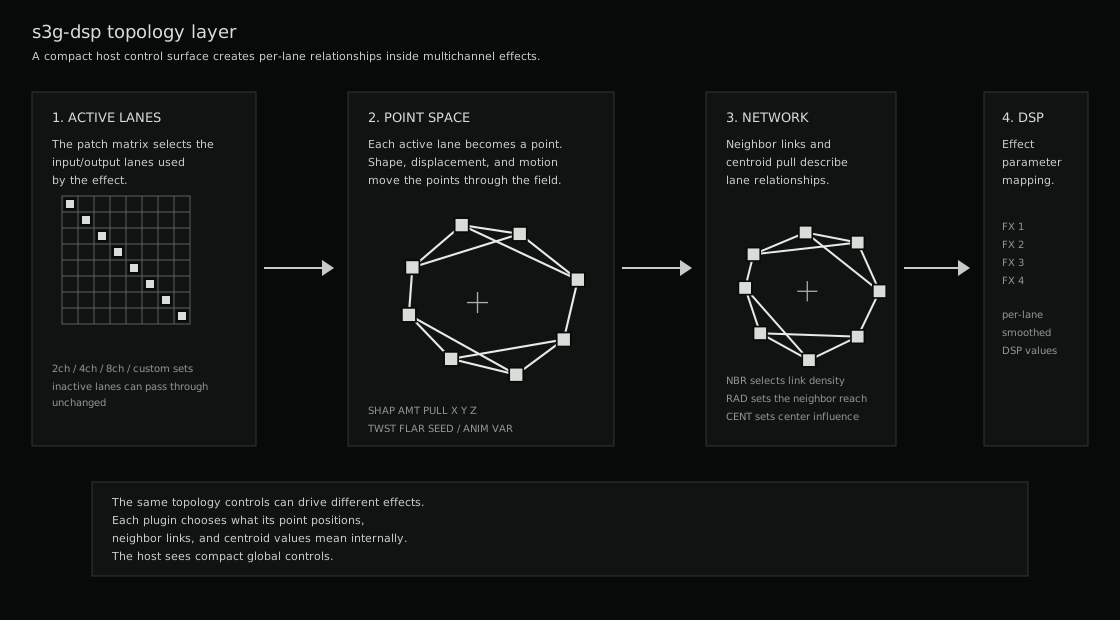
The diagram shows how audio lanes or voices become a point network and how an effect maps that network to sound parameters.
Control Model
- The host pin connector feeds fixed-width effect inputs.
- A patch matrix, voice count, or source count determines the active points.
- Shape and displacement controls position active lanes as points.
- Animation and variants move the point field over time.
- Neighbor and centroid controls define relationships between lanes.
- Each plugin maps the topology field to its own sound parameters.
Heatmap Visualization
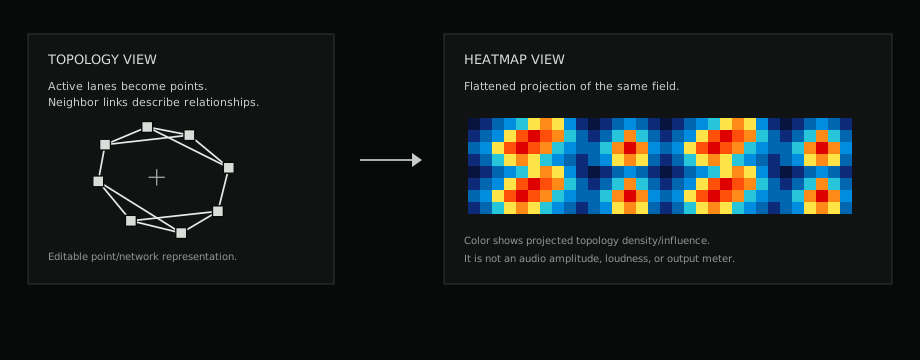
The heatmap is another view of the topology field. It shows point position, displacement, and motion. It is not a level meter. The blue-to-red ramp is a local low-to-high topology scale; see Interpreting Color before comparing it with audio meters.
Plugin Mapping
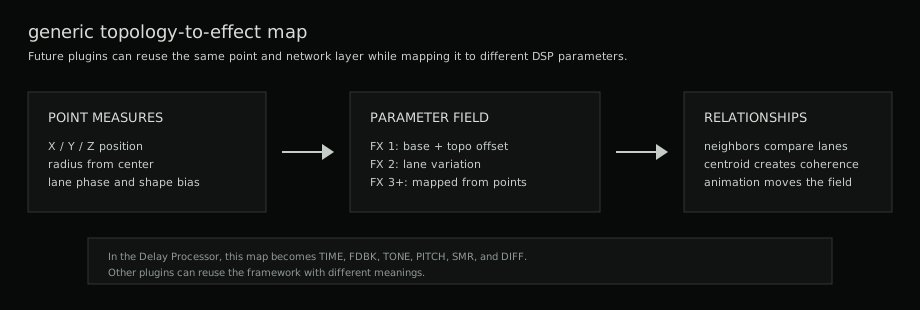
Topology controls stay consistent across plugins, but each plugin decides what the field means. Processor Delay maps it to time, feedback, tone, pitch, smear, and diffusion. Ambi Encoder Stochastic maps the same spatial ideas to pressure-curve mutation, time-fields, generator selection, and AED placement.